Nature Notes - November 2025
Sickleholme Nature Notes
I recall a survey that indicated that November had pipped February as our least favourite month. Certainly, when the leaves fall and the autumn colours disappear then there can be some drear days, particularly as the hours of daylight diminish or when damp weather sets in. This year gave us most of all that, together with some very cold days but occasional periods of sunshine.
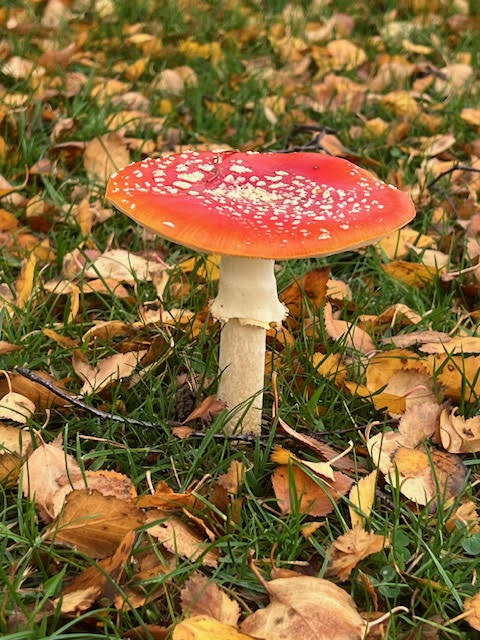
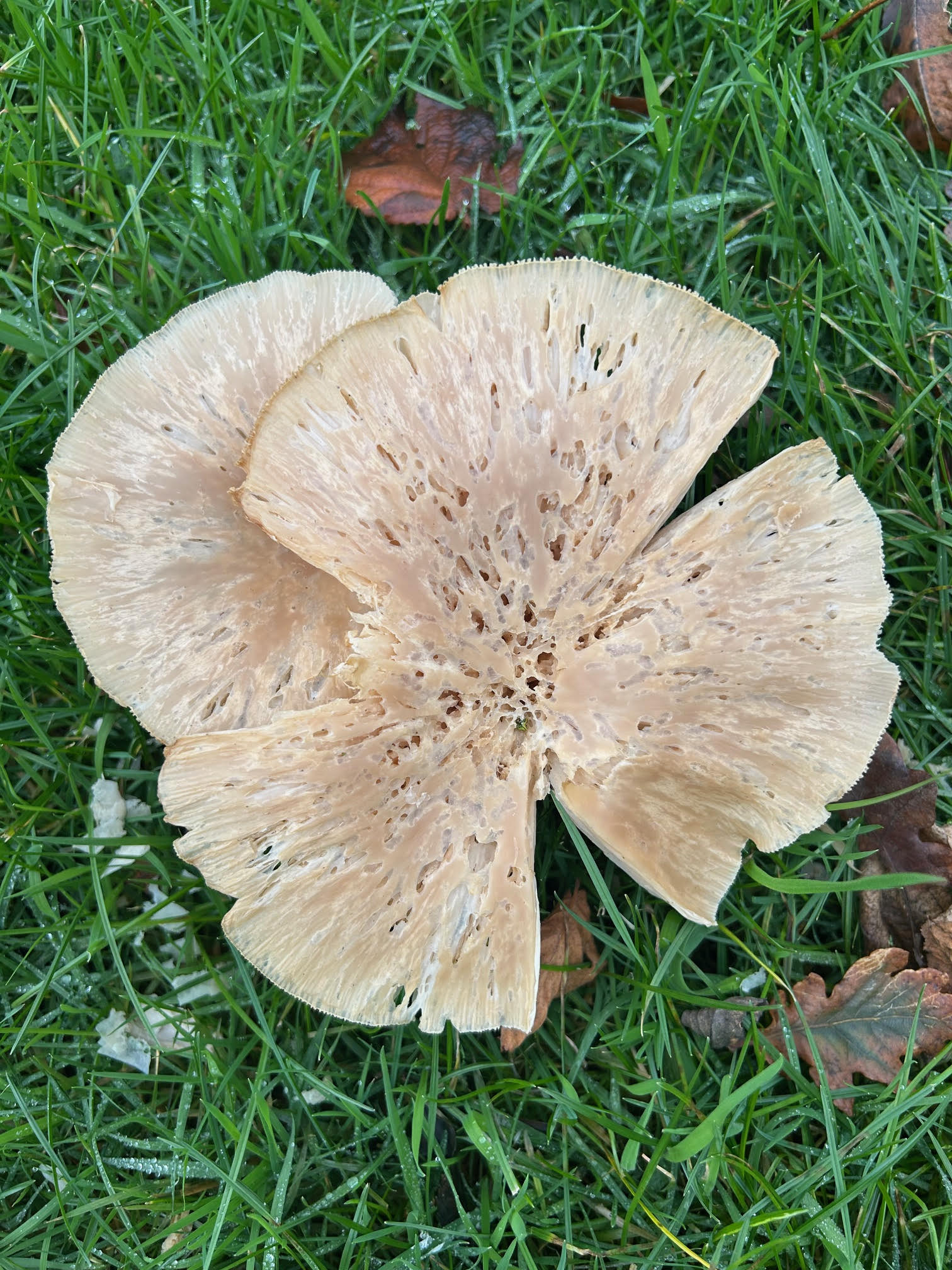
It is always nice to receive observations from new contributors and Kay Barrett was one such this month, sending me photo images of a Fly Agaric. We see these fungi every year around the course, but examples have frequently been nibbled by small mammals or have started to deteriorate after rain. Kay’s specimen was in pristine condition. Having included fungi in the script for the last two months, this also produced other contributions including a large coral-like species photographed by Paul Beeson below the 9th tee. Both fungi shots are included as this month’s images.
After Simon Allen’s erudite description of the autumn tints last month, I was pointed in the direction of a poem by Ted Hughes called “Hawk in the Rain”. That is even more pithy with the line “October is marigold”.
There were plenty of bird sightings including more Pink-footed Geese passage early in the month. Their flight calls are diagnostic but geese flying high and in “V” formation can safely be identified as this species if flying over Sickleholme. If they are in view for long enough, you can also see the leading geese dropping back and others moving to the front of the “V”. As the shape is aerodynamic, this allows the geese to share the benefits of flying further back in the formation.
The 27th of the month was a special day for me, as four of us watched a Peregrine Falcon fly over the 8th fairway. A new one for my Sickleholme raptor list and a welcome visitor, as this species is still illegally persecuted in places. This autumn has been a bumper one for berries and that will assist many of the birds and other creatures that winter around the course. Blackbirds and Mistle Thrushes are already taking full advantage.
I had a question about the “murderous cries” in the woodland to the east of the 9th fairway. I heard them too, and they are from a noisy family of Jays that have also been seen frequently. Another comment was about a flurry of birds that are evident when dropping down the path to the 13th green. I believe that there is a large roost of Chaffinches there, and also a smaller number of Goldfinch. All in all, not a bad mix for an unfashionable month!
Bryan Barnacle