

Nature Notes - July 2026
Sickleholme Nature Notes
In finishing last month’s notes, I promised detail of some of the day-flying moths that can be found around the course. To offer some perspective, it is possible to see around 55/60 species of butterfly in the UK, but there are some 2,500 species of moth. Many are valuable pollinators and few cause any problems for us. As example, only five species of moth attack clothes and fabrics, and those are almost too small to be visible. Similarly, many moth species have “carpet” in their vernacular name, but this merely indicates that they settle with their wings in a flat position.
Our assistant professional, Jack, was one of several members who mentioned a brightly coloured species which I was able to confirm as the Cinnabar moth. It is one of the tiger moth family and feeds voraciously on Ragwort, whilst the rich colours signal toxicity that makes it unpalatable to predators. Yellow Shell is another species that is seen regularly at Sickleholme and, although less aesthetic, the clouds of small moths that can be seen in our longer grass are mainly Common Grass-moth, White-streaked Grass-moth and White-banded Grass-moth. A few moth species lay their eggs in water, and the practice ground pond can hold good numbers of the delightful Brown China-mark moth.
One that we don’t need is an invasive colonist from south-east Asia that has now reached Derbyshire. Jeff Farnell and Pat Tann drew my attention to a large attractive moth that had settled on the clubhouse window, and it was immediately obvious that this was a Box-tree Moth. The caterpillars can totally destroy a Box hedge in a matter of weeks, and this unwanted immigrant seems to be thriving locally. Happily, for where it was found, they don’t eat Privet!
Having to date identified just over 500 species of moth in our own garden, it is not difficult to imagine that moth trapping at Sickleholme (with moths being released unharmed after recording) would produce several hundred species in any twelve-month period. I photograph any moths new to me, and this month’s attachments feature both the Cinnabar and Box-tree Moth.
The restored pond has been looking very good since the Water Lillies flowered and the surrounding growth has suited dragonflies, with an Emperor Dragonfly noted and a number of Large Red Damselfly. Elsewhere on the course, Southern Hawkers have been seen along the hedgerows.
So, all entomology this month, but a number of the birds have been missing due to it being time for feather moult or due to the hot weather. Many thanks, however, for the reports that did come to me.
Bryan Barnacle
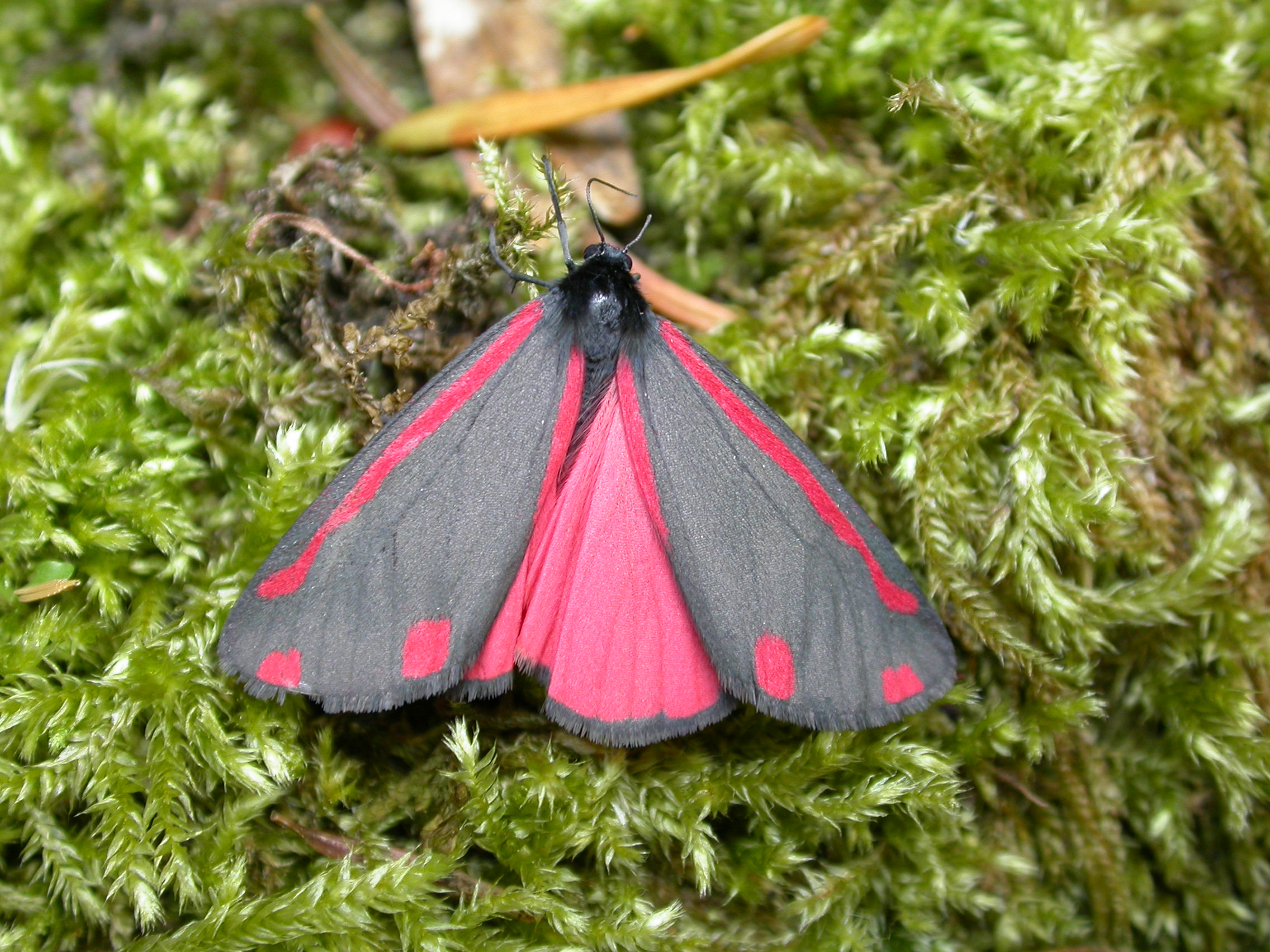
Cinnabar
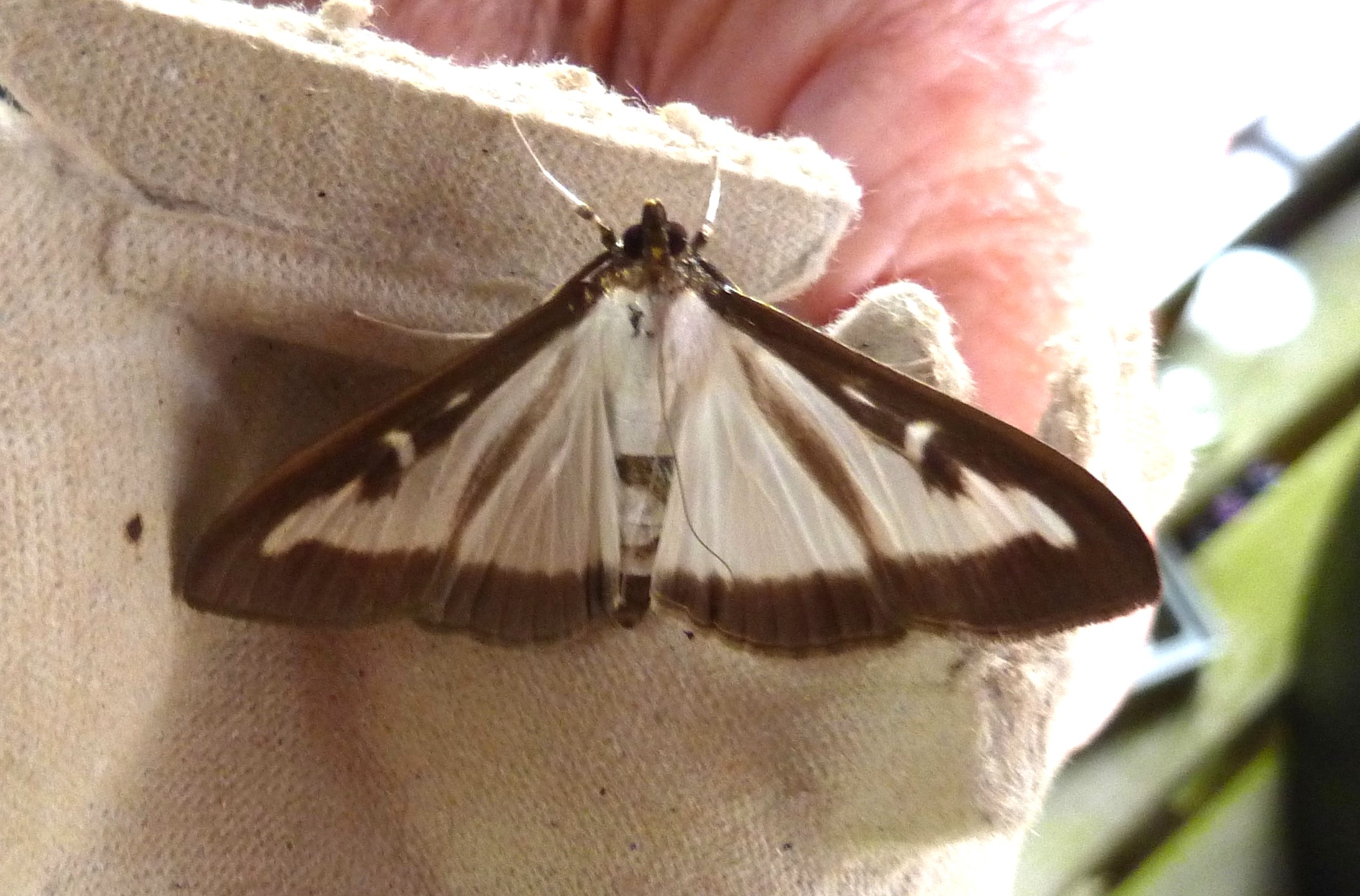
Box Tree Moth