Nature Notes - February 2026
Sickleholme Nature Notes
Sadly February, although warmer than the seasonal average, continued to provide us with wet and occasionally snowy conditions that saw the course closed or subject to restrictions. Not surprisingly, therefore wildlife sightings and reports suffered accordingly. A few snippets then, to keep us going until a warm dry Spring (we can but hope!) that would benefit us all.
Our friend Alan Kydd has been working hard on our bird boxes. Following a full check, we will have 31 nest boxes ready for visitors, after a number of repairs and the relocation of one box that was attached to a fallen tree. Alan has also looked at eight “woodcrete” boxes introduced as part of the Network Rail mitigation process. All need relocating and Alan will be undertaking that task too. Our grateful thanks to him, as ever, for all of his efforts on our behalf.
The media seem to have embraced a number of stories about water quality and a recent article in British Wildlife magazine again emphasised how some invertebrates are more sensitive than others. Thus, finding plenty of mayflies, caddis flies, dragonflies and stoneflies larva, suggests that water is of good quality. Thanks to John Holliday and Trevor Hoyland, we have twice checked our part of the Upper Hurst Brook in recent years and were well satisfied with the results. John has kindly agreed on a further survey, which we hope to run around late April.
The clubhouse bird feeders, which Patrick so diligently maintains and stocks, may go unnoticed but provide a valuable winter resource and attract a good variety of species. Matt now tells me, that with help from Patrick, a further feeder has been introduced near the machinery sheds.
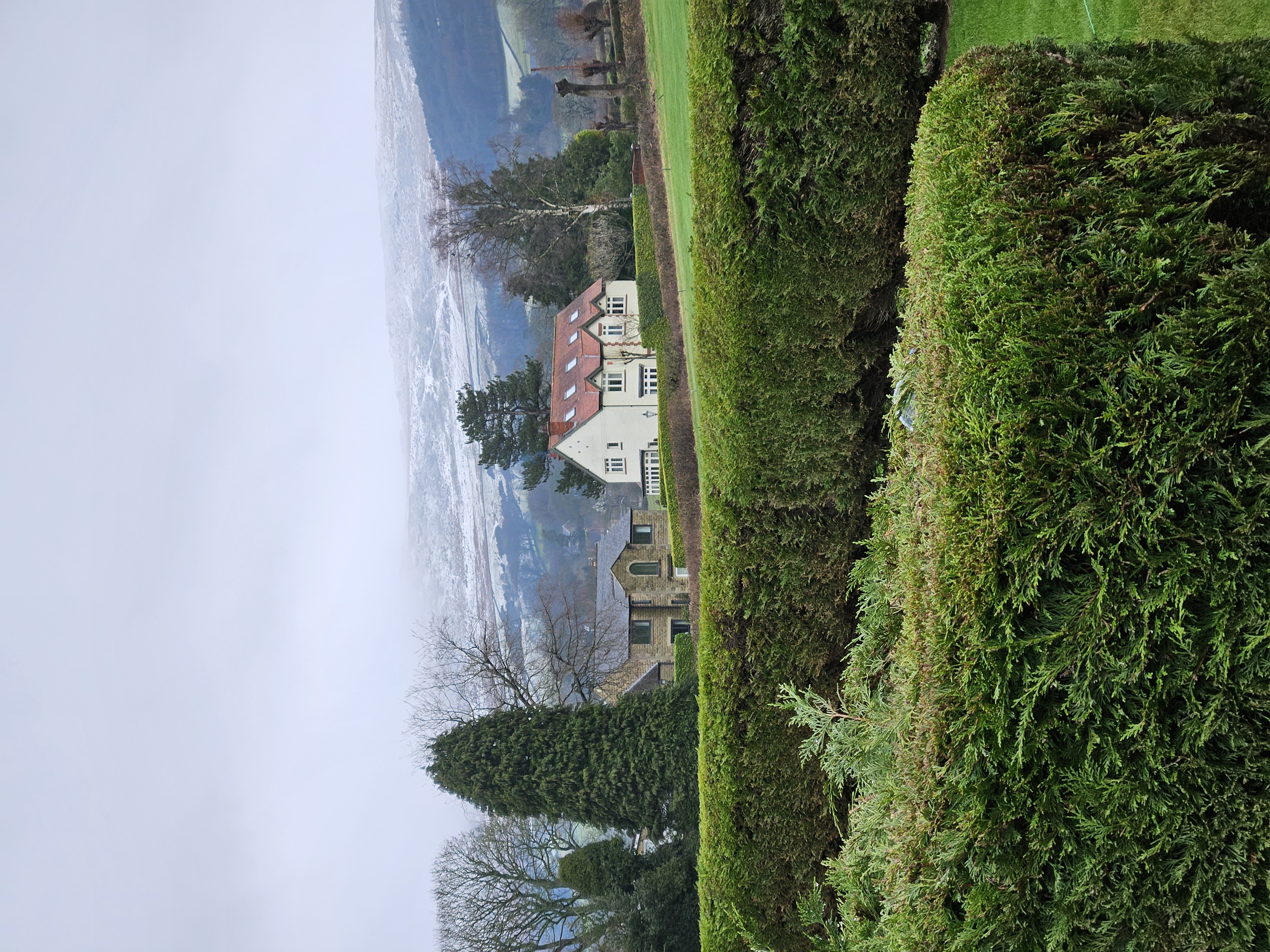
The mild spell also meant that despite some miserable weather, the grass grew and looked remarkably green at times. This month’s snapshot was taken on a day when the course was closed but with snow visible just a little higher up the valley.
Let’s hope that March provides us with much birdsong, more wildflowers in bloom, and our first butterflies of the year.
Bryan Barnacle