

Nature Notes - April 2026 (Part2)
Sickleholme Nature Notes – part two
The Upper Hurst Brook is the stream that runs north to south through Sickleholme and is crossed twice during our rounds of golf. On the 28 April, I joined John Holliday and Trevor Hoyland who had very kindly agreed to repeat a survey intended to reveal what invertebrates live in the stream and which in turn give a good guide to water quality.
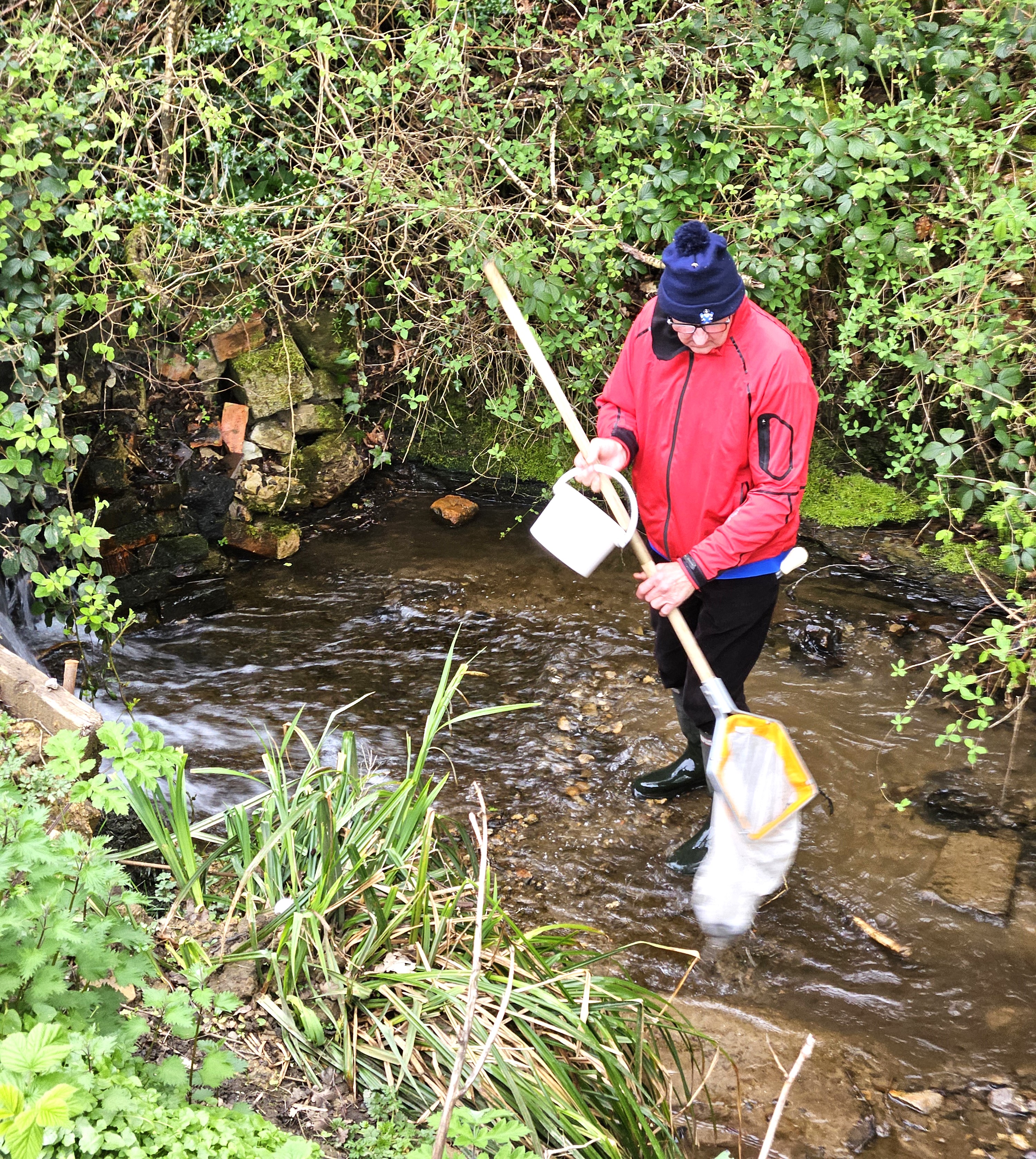
The accepted methodology involved John climbing down into the water (see photo) and agitating the bottom with his feet to disturb what creatures might be there (as egrets do when seeking food!) and then netting the resultant mix before adding it to a tray of water taken from below. After this has settled, a myriad of small creatures could be seen and identified by John and Trevor. After doing this in an area below the 13th tee, the process was repeated below the 5th tee. All fascinating to me as the observer.
I imagine that few members have a feel for what may exist in such a watercourse unless, like John and Trevor, they are fly-fishermen and need to know what might attract a fish and the phenology involved in matching a lure to the right time of year. What is there, however, forms the lower end of the food chain and determines what larger creatures are included in the rich biodiversity of the course and its surrounds.
We sorted out at least a dozen species although some of the aquatic nymphs rely on close examination of body segments and paired tails. Many relate to the Mayfly family including the genus Heptagenidae and that of Baetidae. I live more comfortably with vernacular names and my notebook filled with those such as Freshwater Shrimp, Caseless Caddis, Flatbodies, and Stonefly.
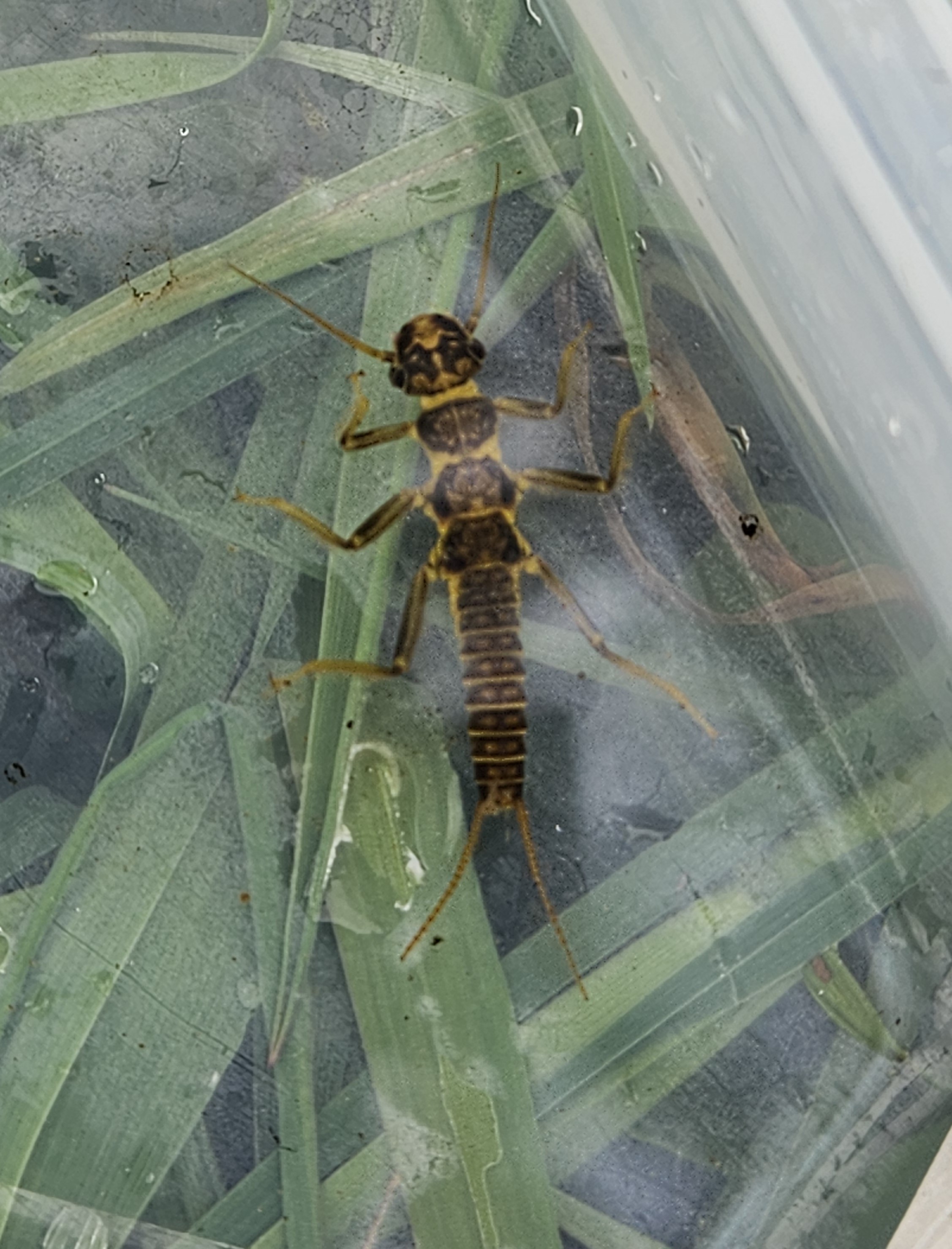
I didn’t have the facility for any macro photography, but I did manage the image shown of a rather large Stonefly which impressed me. All in all, a very rewarding experience that proved the wealth of riches that lies below the water level. Indeed, some of these small invertebrates can lie in the mud for two or three years before hatching and flying clear of the water. The other bonus was confirmation of excellent water quality; very welcome but not totally surprising with the flow coming down from open moorland that lacks pollutants.
My special thanks to John & Trevor.
Bryan Barnacle
Stonefly Nymph